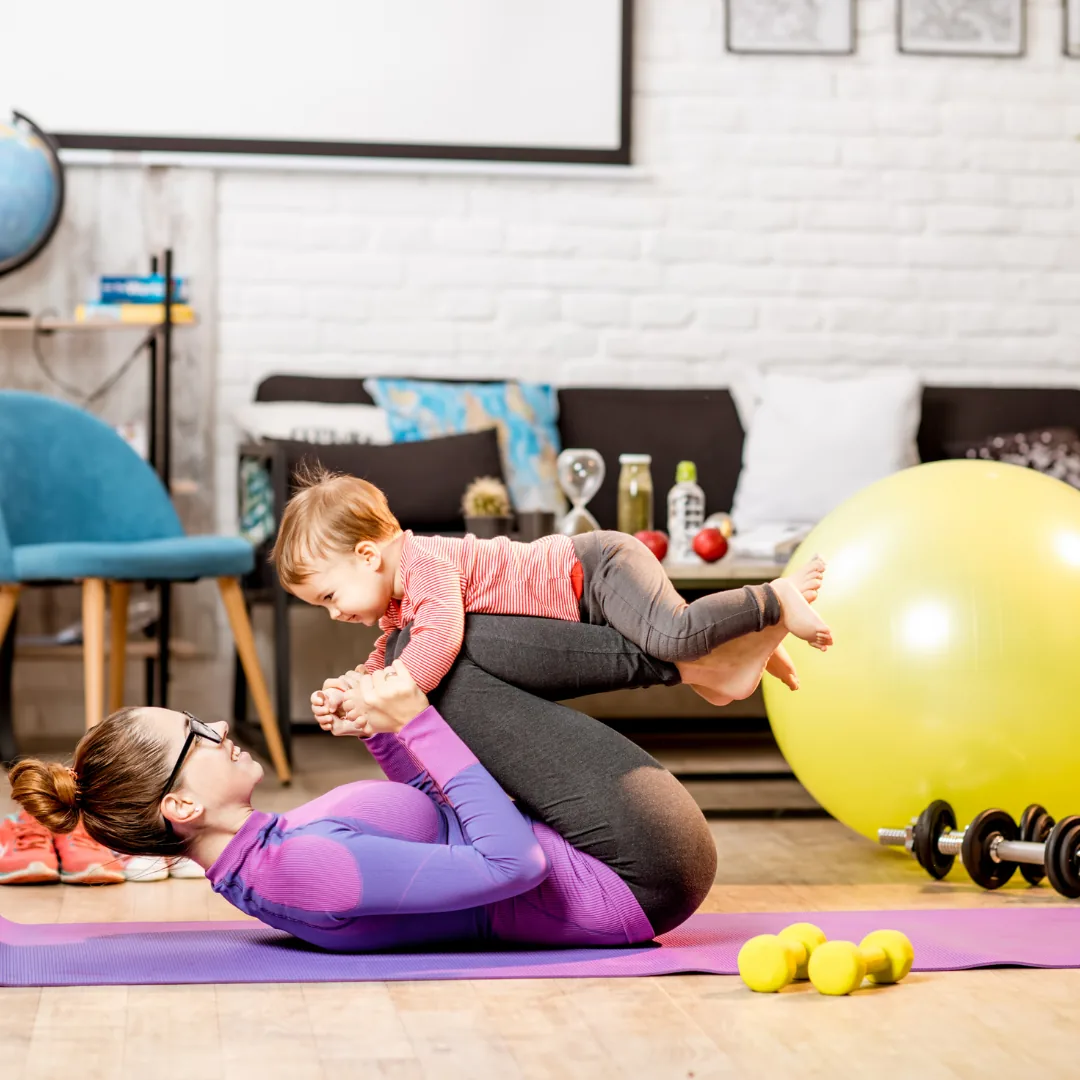
How soon after giving birth can I start exercising?
You can start doing pelvic floor exercises straight away after a vaginal delivery. (Once catheter is removed post C-section) Not only will this help strengthen muscles after giving birth but doing them will also reduce swelling and increase blood flow, which in turn will improve healing. Check out my Instagram post around pelvic floor exercises and how to do them.
All other exercise depends on what type of labour and birth you had and how active you were during your pregnancy.
If you exercised throughout your pregnancy and you had a straightforward delivery then you can resume light exercise and stretching as soon as you feel ready. Walking would be a good option to start with. If you had a c-section or an episiotomy / tearing after a vaginal birth, then you probably aren't going to want to start exercising straight away.
Either way, take it slowly and listen to your body – you've been through a lot and its more important to rest and get to know your baby.
The general guideline for resuming more intense exercise such as strength training or fitness classes is 6 weeks post vaginal or 10-12 weeks post c-section. (the guidance for more high impact work such as running is 12 weeks post partum) Again, listen to your body and don't jump straight into anything too strenuous- try to modify anything high impact until at least 12 weeks.
Discuss your plans to return to exercise with your GP / Midwife when you have your post-natal check. They can then check you for Diastasis Recti (more on this further down) and check any scars / stitches have healed correctly and bleeding has stopped.
Don't go swimming until you've had your post-natal check and at least 7 days with no bleeding / discharge.
What type of exercise can I do?
Once you've passed that 6 week or 10-12 week mark, can resume most exercises, however keep in mind that your joints / ligaments are still loose due to the hormone, Relaxin, for at least five months after the birth, longer if you're breastfeeding. This makes you susceptible to injury. Avoid doing high impact / high intensity exercise straight away and build up gradually.
If you are training with weights, then resume training with the weights you were using at the end of your pregnancy and gradually build back up. If you didn't weight train during pregnancy and / or are not used to lifting weights, then keep the weights light and build up slowly.
If you are attending fitness classes, it's a good idea to let the instructor know that you've just had a baby so that they can offer modifications for you to follow. Better still, get advice from a Pre & Post Natal qualified instructor.
Every Mama & Me Fitness plan is written around where you are, so it's suitable if you're early post-natal and builds at your own pace. For more information, please get in touch.
Can I train my core?
Your core may be feeling very weak and it's no surprise, childbirth is no mean feat!
Just like everything else its about building up gradually, start with some diaphragmic breathing exercises and pelvic tilts before moving onto simple core activation moves and gradually moving through to more advanced core exercises as you get stronger.
Its possible you may have some ab separation (diastasis recti) which is normal after delivery. For most women this is resolved in a few weeks but for others it may take longer and require some more focus. If during core exercise (or any exercise) you notice any hard stomach doming (where your stomach protrudes into a hard cone) this could mean you have some separation and you may be putting too much pressure through your core, so dial down the intensity or stop completely. Ask your GP to check your abs when you go for your post natal check or ask to be referred to a Women's Health Physio.
If you want to try and check your abs yourself, check out my blog post on ab separation with some more information and a video to guide you.
You will feel stronger in every way if you have a strong core so try to prioritise core work as much as possible.
Just 5-10minutes of core exercises 2-3 times a week will really make a difference.
Anything to avoid?
If you had persistent back pain or pelvic pain during pregnancy then there's a chance this will continue after birth. Speak to your GP before resuming exercise or get advice from a physio.
Carpel Tunnel syndrome is fairly common postpartum, especially if you're breastfeeding. This is where inflammation and swelling (edema) in the medial nerve in the wrist causes pain, swelling and weakness. Exercises such as press ups and burpees may aggravate it. If you think you may have Carpel Tunnel Syndrome, get advice from your GP as it could get worse if left untreated.
As mentioned earlier, listen to your body and avoid high impact / high intensity exercise for the first few months and build up slowly. If you're very active / were very active throughout your pregnancy and are used to high intensity exercise then you might be ok to get back into it sooner, however just be mindful of your joints / pelvic floor and make sure you build up your core strength.
Can I exercise if I'm breastfeeding?
Absolutely, exercising will not have a negative impact on your breastfeeding journey and will not affect your milk supply or composition. It's best to try to feed your baby before exercising, to avoid discomfort from your breasts being too full and make sure you wear a good, supportive sports bra.
It's also important to drink plenty of water before, during and afterwards, to avoid dehydration. I would always recommend a small snack within 30 minutes of your planned workout too, to keep those blood sugar and energy levels in check.
If you experience any pain, discomfort, dizziness or excessive fatigue then stop immediately and get advice from your GP. The above advice is general advice not intended to be medical advice as I am not a clinician, nor is it specific to any individual.